
Single implant
one implant supports one crown. Several positions can be treated in the same mouth, but each takes its own implant. Because the neighboring teeth are left untouched, the restored tooth is cleaned like a natural one.
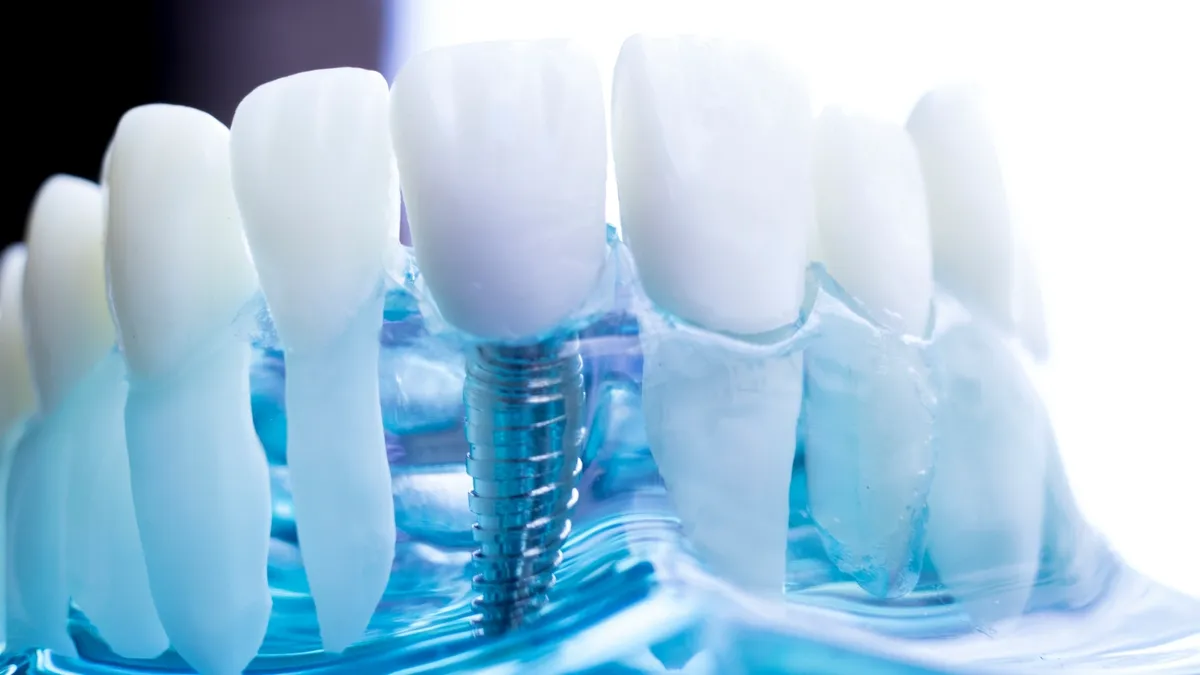
A dental implant is a titanium post placed in the jawbone to take the place of the root of a missing tooth. Once the bone has healed around it, the implant carries a crown, a bridge or a denture. It is an option after the loss of one tooth, several teeth or a full arch, where there is enough bone to hold an implant or bone can be rebuilt first.
Unlike a conventional bridge, an implant does not borrow support from the neighboring teeth, so healthy adjacent teeth are not reduced. It also carries chewing forces into the bone, which helps limit the bone loss that follows the loss of a tooth.
one implant supports one crown. Several positions can be treated in the same mouth, but each takes its own implant. Because the neighboring teeth are left untouched, the restored tooth is cleaned like a natural one.
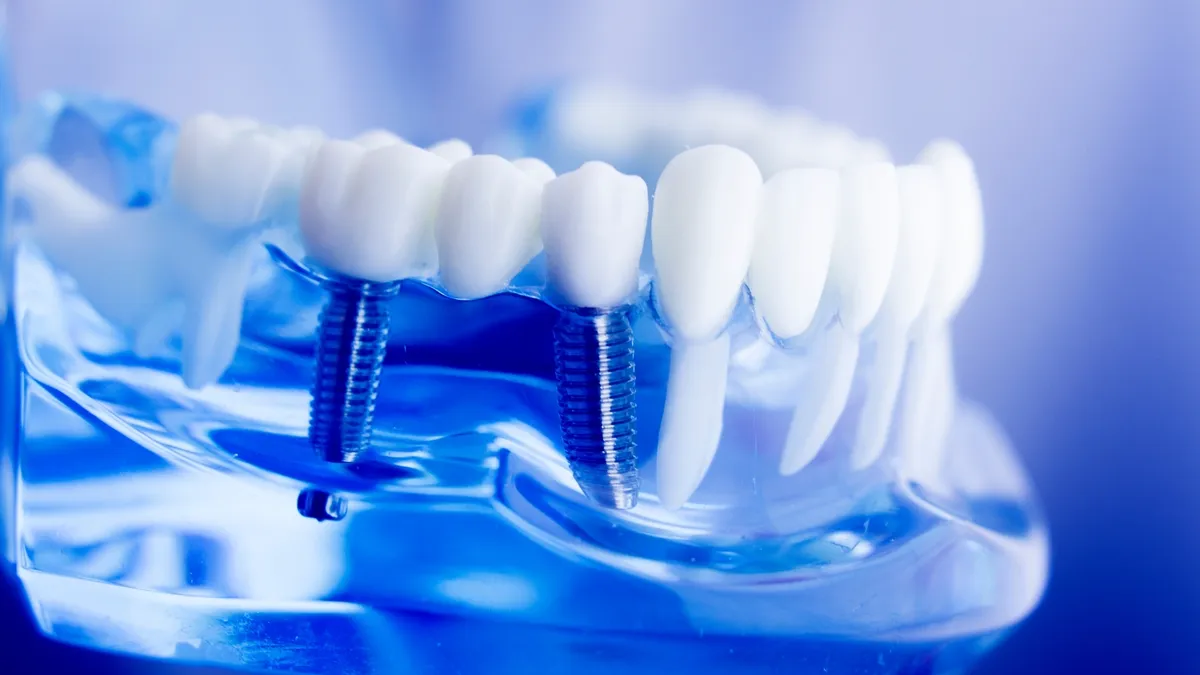
when several adjacent teeth are missing, implants are placed at each end of the gap and a bridge spans between them. This restores the row with fewer implants than one per tooth, while keeping enough support for chewing.
two or four implants are placed in the jaw and left to heal. Once they are stable, attachments connect them to a removable denture, which clips into place and is taken out for cleaning.
four, six or eight implants are placed in one jaw, depending on the quality of the supporting bone, the patient's needs and the surgeon's assessment. A temporary bridge is fitted so that eating and speaking continue while healing runs its course.
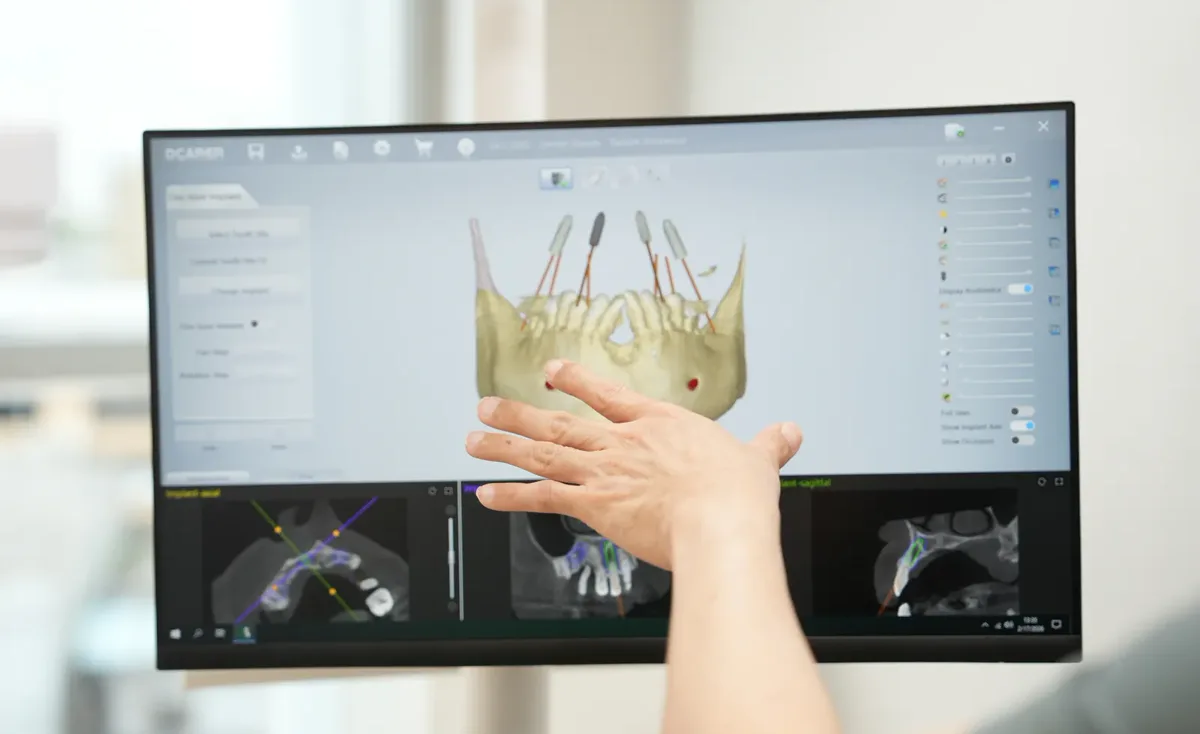
Planning starts with a clinical examination and three dimensional imaging, which shows how much bone is available and where the implant can be placed. The implant is then placed under local anesthesia. Over the following months the bone grows onto its surface, a process called osseointegration, and the final crown or bridge is fitted once that bond is established.
Some swelling and tenderness after surgery is normal and settles over the days that follow. An implant cannot decay, but the gum and bone around it can become inflamed if plaque is allowed to build up, so daily brushing, cleaning between the teeth and regular checks matter as much as they do for natural teeth.
This treatment is part of our digital dental implant care.
See the implants pagePick a time that suits you. We will call you back to confirm the appointment.