
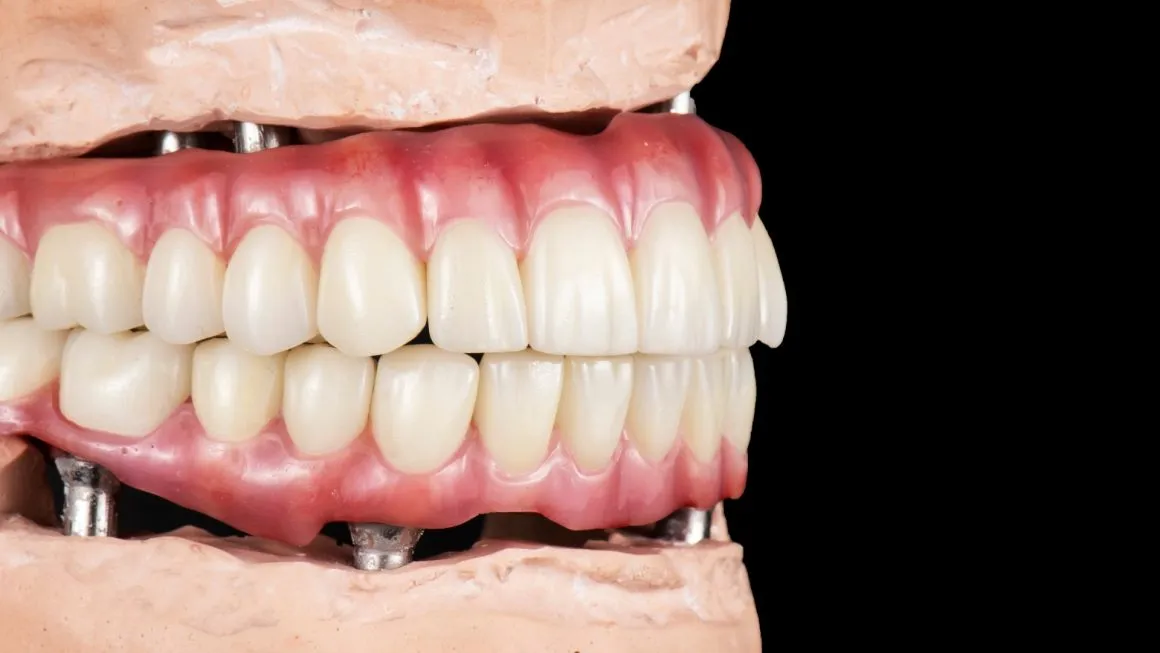
Full-mouth dental implants, also known as All-on, involve placing 4, 6 or 8 implants per jaw, depending on the quality of the supporting bone, the patient's needs, and the dentist's judgement. A temporary bridge is then attached, allowing the patient to eat and carry out daily activities normally.
The advantages of full-mouth dental implants include restoring natural-looking teeth and a confident smile, along with greater strength and stability than traditional dentures. They improve chewing, function like natural teeth, help slow bone resorption in the implant area, and help preserve the original facial structure. Because a high level of skill is required, it helps to choose a clinic whose dentists have experience and expertise in dental implants.
The general steps are: diagnosis, with 3D X-rays taken to analyse and plan the treatment; implant placement into the supporting bone, the number depending on bone quality and the dentist's judgement; attachment of a temporary bridge, so the patient can eat and go about daily life while the implants integrate with the bone; and finally attachment of a permanent bridge onto the titanium implants, giving a new set of functional, natural-looking teeth.
Read more about this treatment: Types of dental implants