
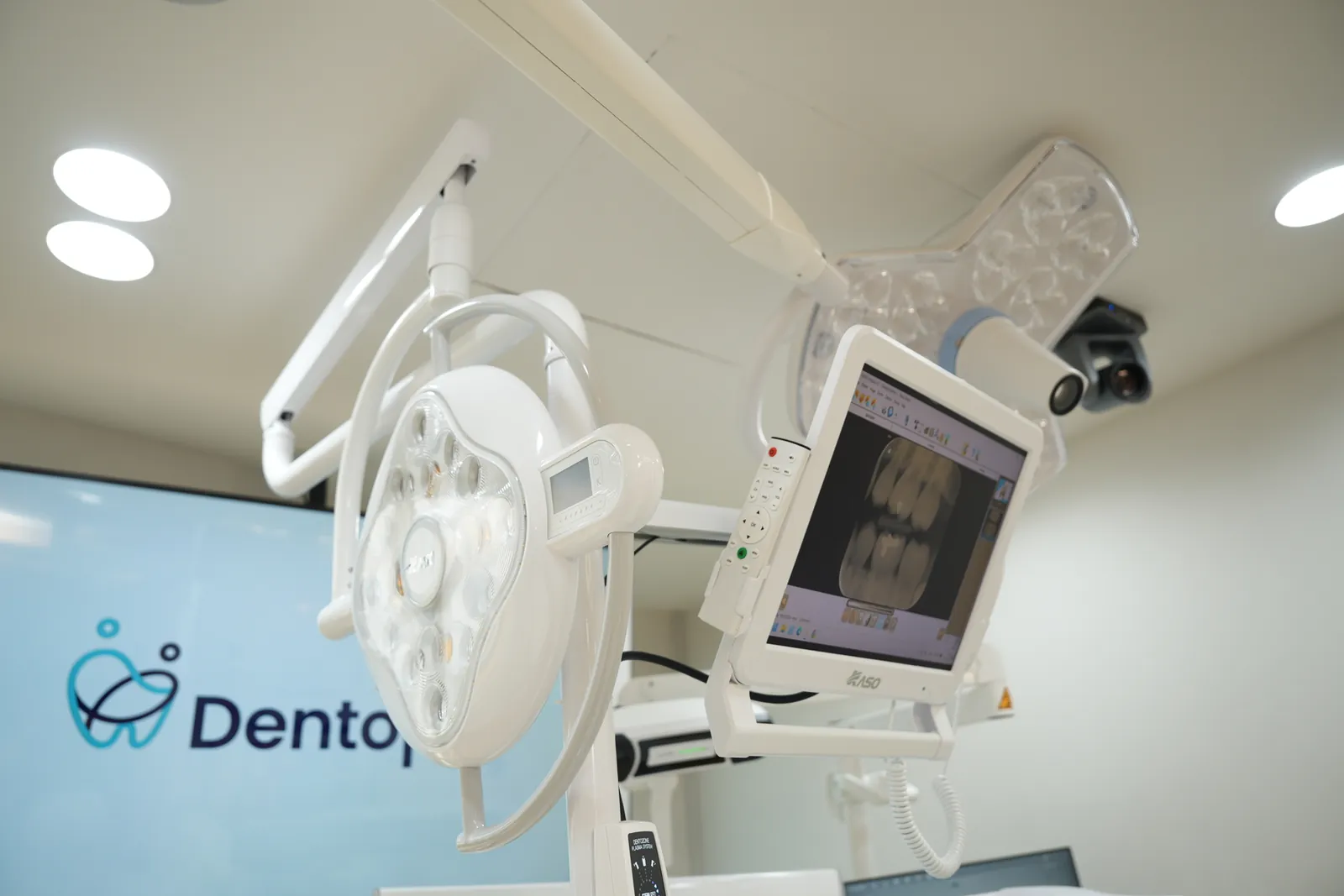
Digital Implants
Planned in three dimensions, placed with navigation.
NAVIGATION SYSTEM
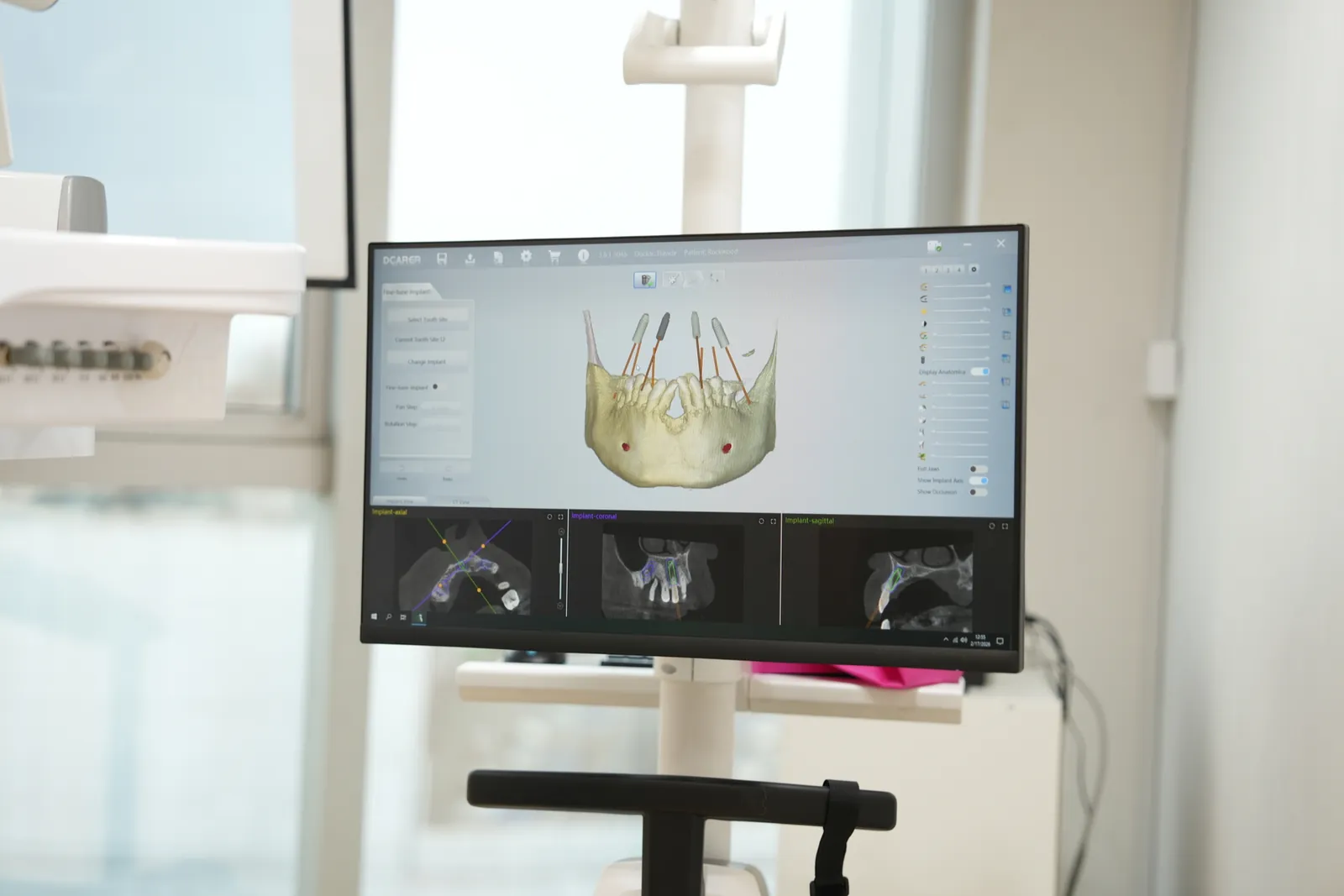
Every degree of an implant, under control
- Less deviation from the treatment plan
- Less swelling, and less pain
- The position is seen clearly before it is made
- Fewer implants left at an angle
- Placement becomes more precise
- A position designed for the long term, subject to your care and to the condition of the mouth
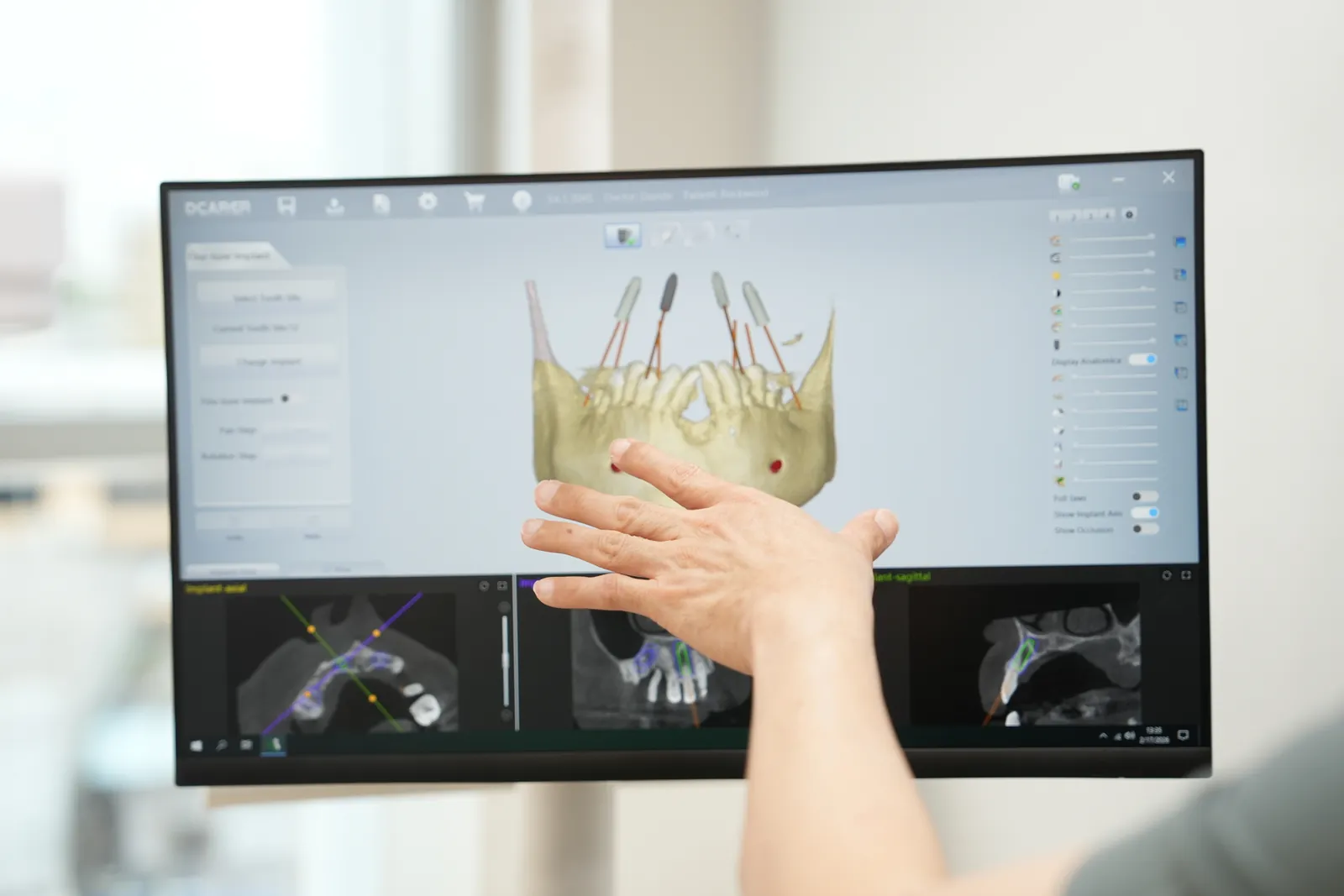
Seamless Digital Workflow
Analysis, design and fabrication all live in one connected system, because the CBCT scanner and the digital laboratory both sit inside the clinic. Work that once took weeks now takes far less.
Same-day solutions
In suitable cases, an implant and its temporary crown can be completed within a single day, thanks to detailed advance planning and the in-house digital lab.
Full arch
All-on-4 and All-on-6
For patients who have lost all the teeth in a jaw, four or six implants carry a fixed bridge: chewing and smiling return, without a removable denture.
- Stronger and more stable than a conventional denture, chewing close to natural teeth
- Helps prevent bone resorption and preserves the shape of the face
- Four, six or eight implants, depending on bone quality and the dentist's judgment
How the treatment runs
Diagnosis, with 3D X-rays to analyse the bone and plan the treatment
Implant placement into the supporting bone, at the positions planned
A temporary bridge is attached, so you can eat and live normally while the implants integrate
The permanent bridge is fixed to the implants: a new set of teeth that works and looks natural
What is a dental implant?
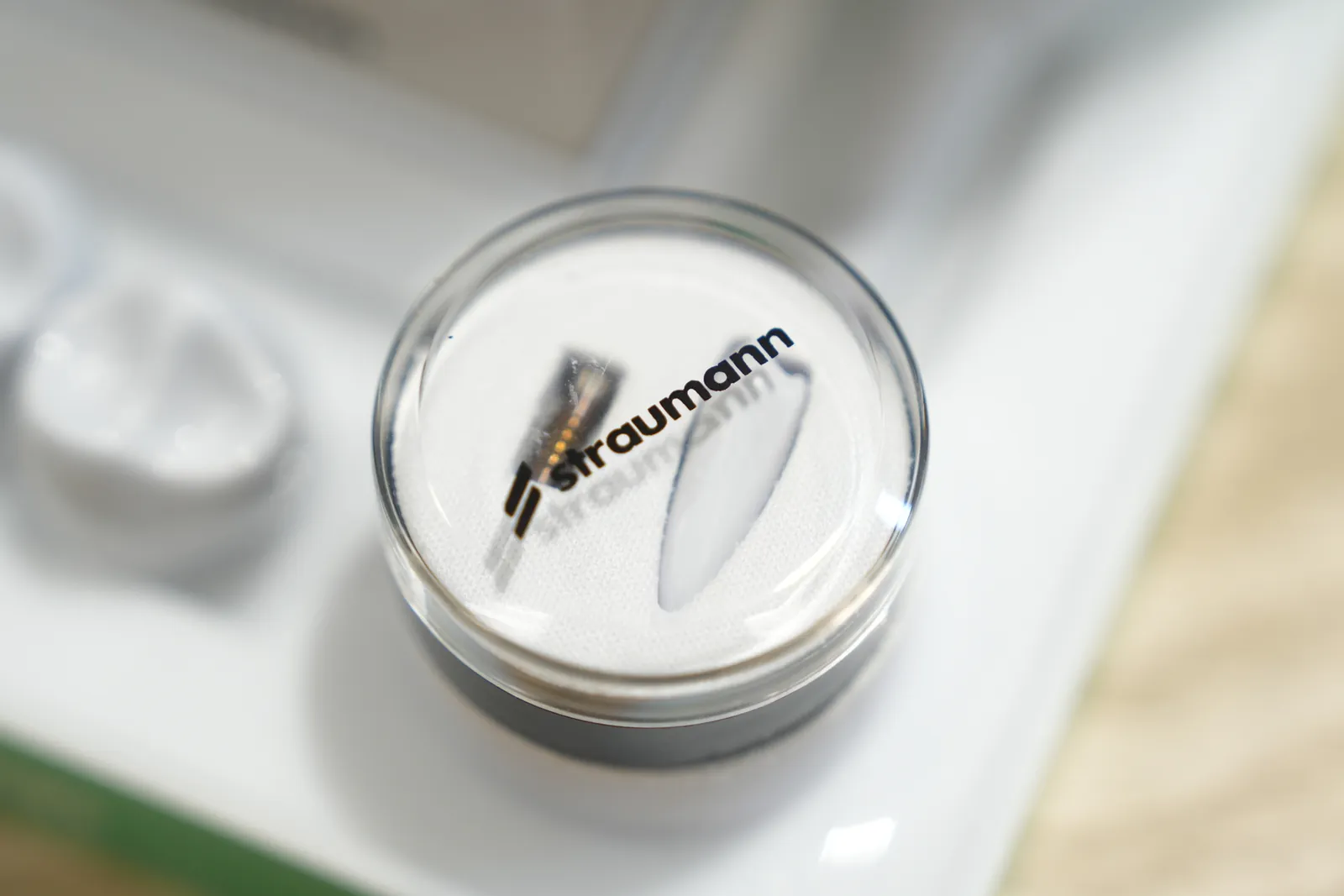
A dental implant is a titanium root shaped piece placed where a tooth has been lost, with a crown fitted on top. It looks natural and chews with a force close to a real tooth. The technique has been in use for more than forty years, and keeps improving.
The forms it can take
Single implant
One implant for one position. The neighbouring teeth are left untouched, and care is as simple as for a natural tooth.
Implant-supported bridge
Several adjacent teeth replaced with implants at each end and a bridge between them.
Implant-retained overdenture
Two or four implants anchor a removable denture, at a lower cost than a fixed solution.
Full arch (All-on)
A fixed bridge for the whole jaw on four to eight implants. See the All-on section above.
Under the care of
Prof. Dr. Atiphan Pimkhaokham
Pioneer of navigation guided implant placement in Thailand, ranked among the top 2% of scientists worldwide in the Stanford University listing, working with a team of implantology and oral surgery specialists.

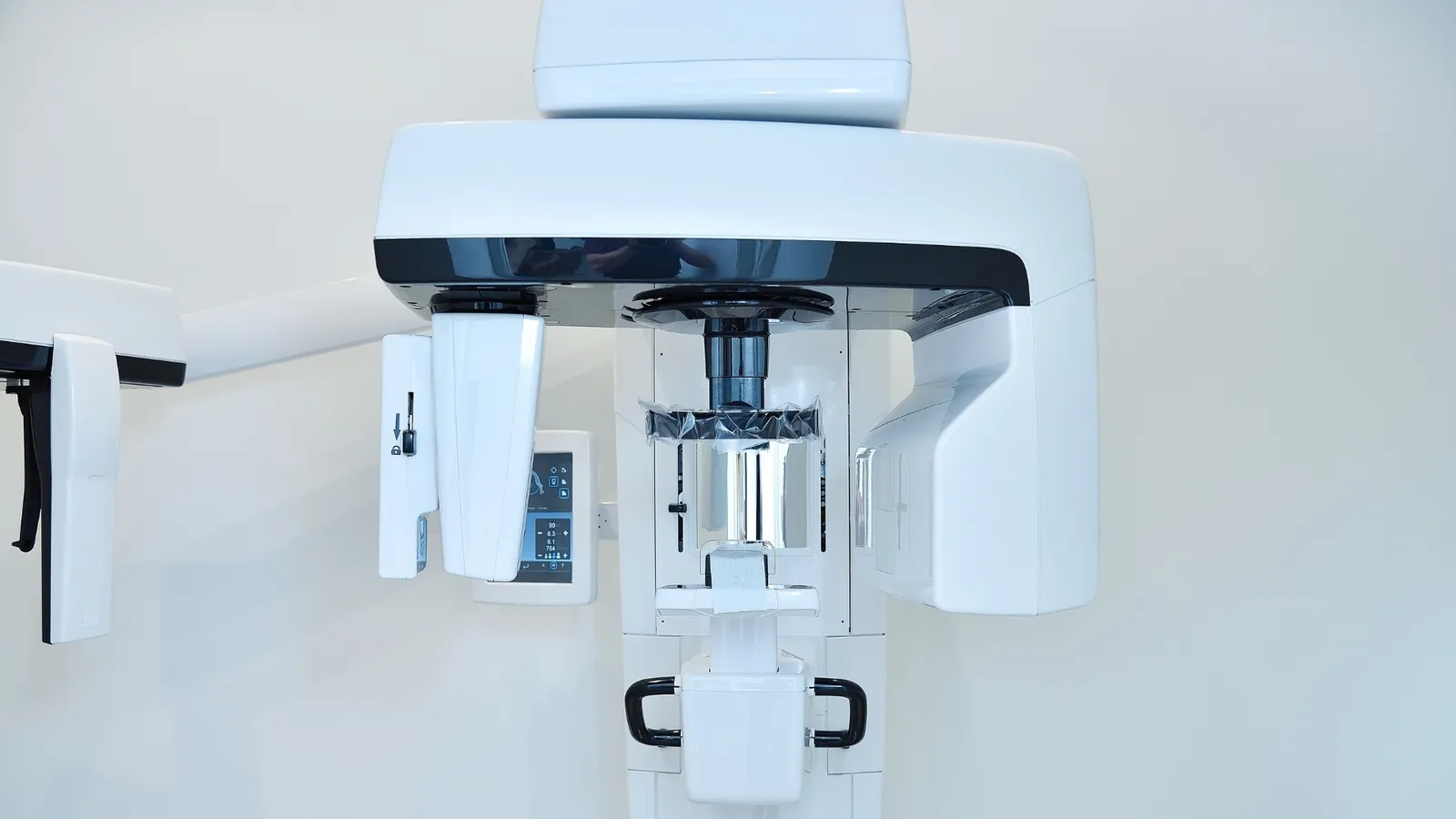
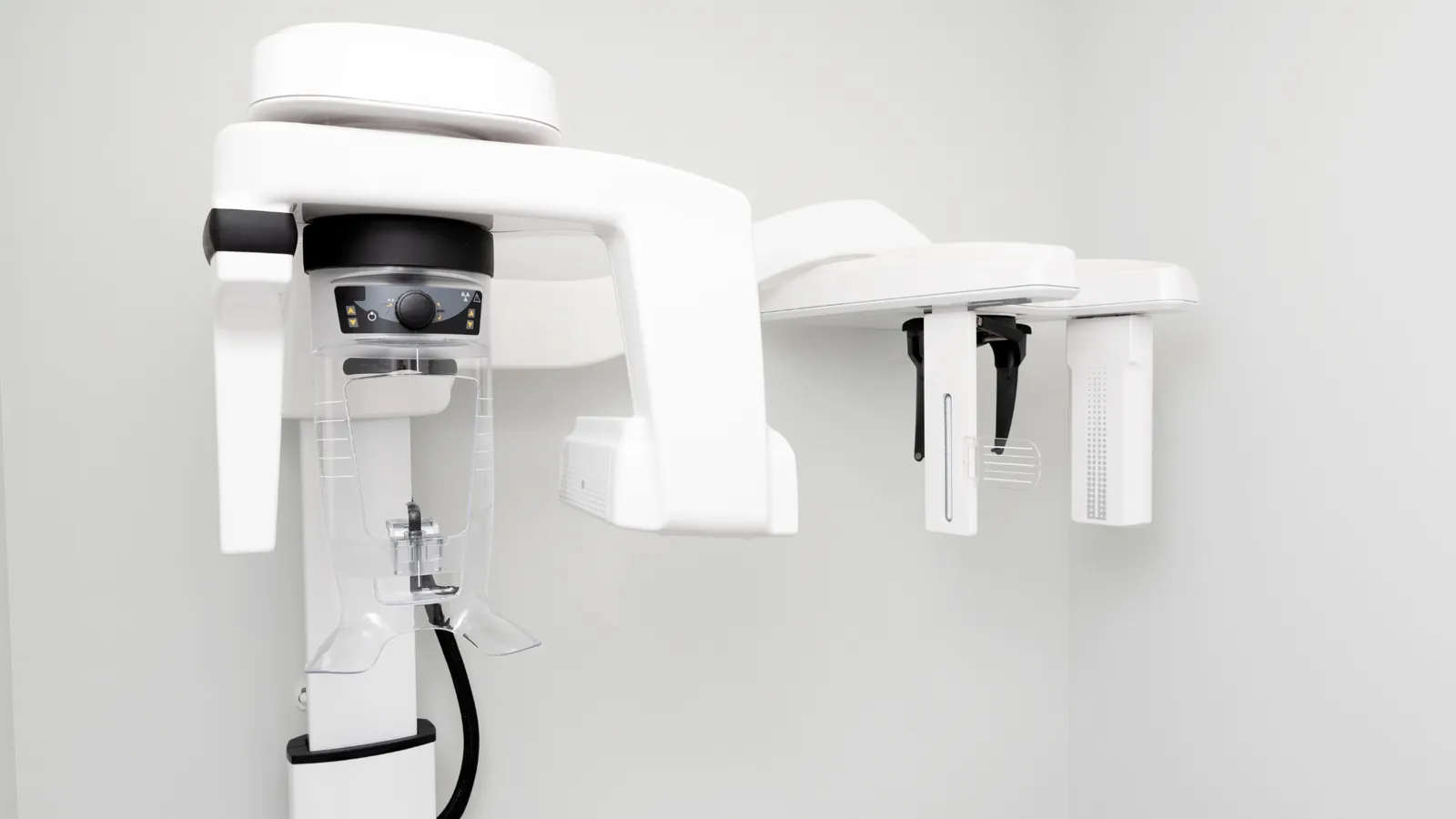
Precision starts with the image
The clinic's own CBCT scanner produces a three dimensional view of the jaw detailed enough to plan the position of every implant before surgery begins.
Frequently asked questions
What is a dental implant?
A titanium root shaped piece placed into the jawbone where a tooth has been lost, with a crown fitted on top. It feels and chews close to a natural tooth.
Can a dental implant really be done in one day?
In suitable cases, yes. The clinic has its own CBCT scanner and digital laboratory, so planning, surgery and the temporary crown can happen within a single day. Your dentist assesses each case individually.
What is the difference between All-on-4 and All-on-6?
The number of implants that carry the full arch bridge: four or six. The dentist chooses based on the quality of the supporting bone and the patient's needs. Some cases use up to eight.
Why choose full mouth implants over removable dentures?
A fixed bridge on implants is more stable, chews better, does not move while speaking or eating, and helps prevent jawbone resorption, which preserves the shape of the face.
How long do dental implants last?
Implant positions are designed for long term use. The actual lifespan depends on your care and on the condition of your mouth; regular check ups extend it.
Talk to us about dental implants
Book an initial assessment, or message us on LINE if you would rather ask a question first.